
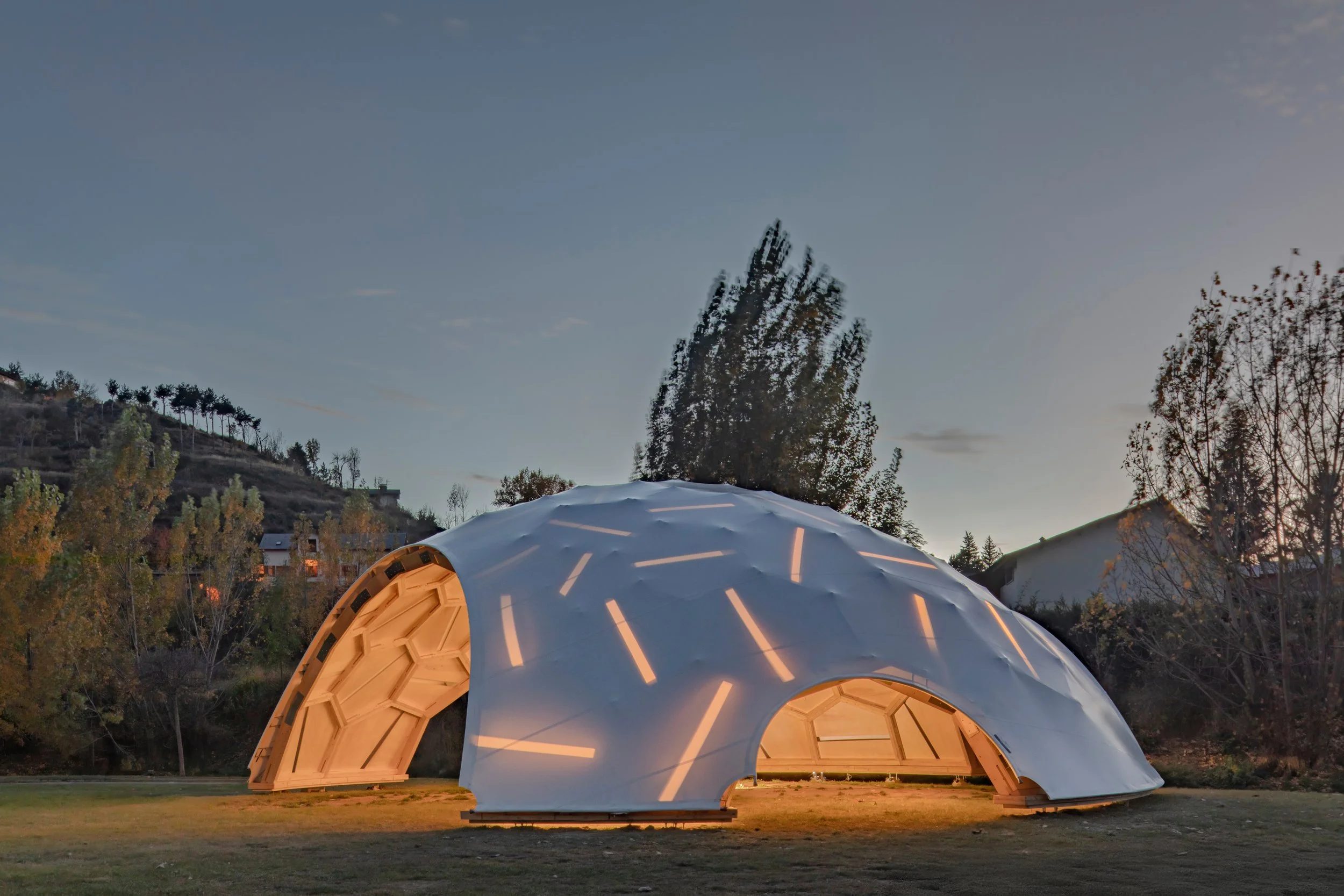
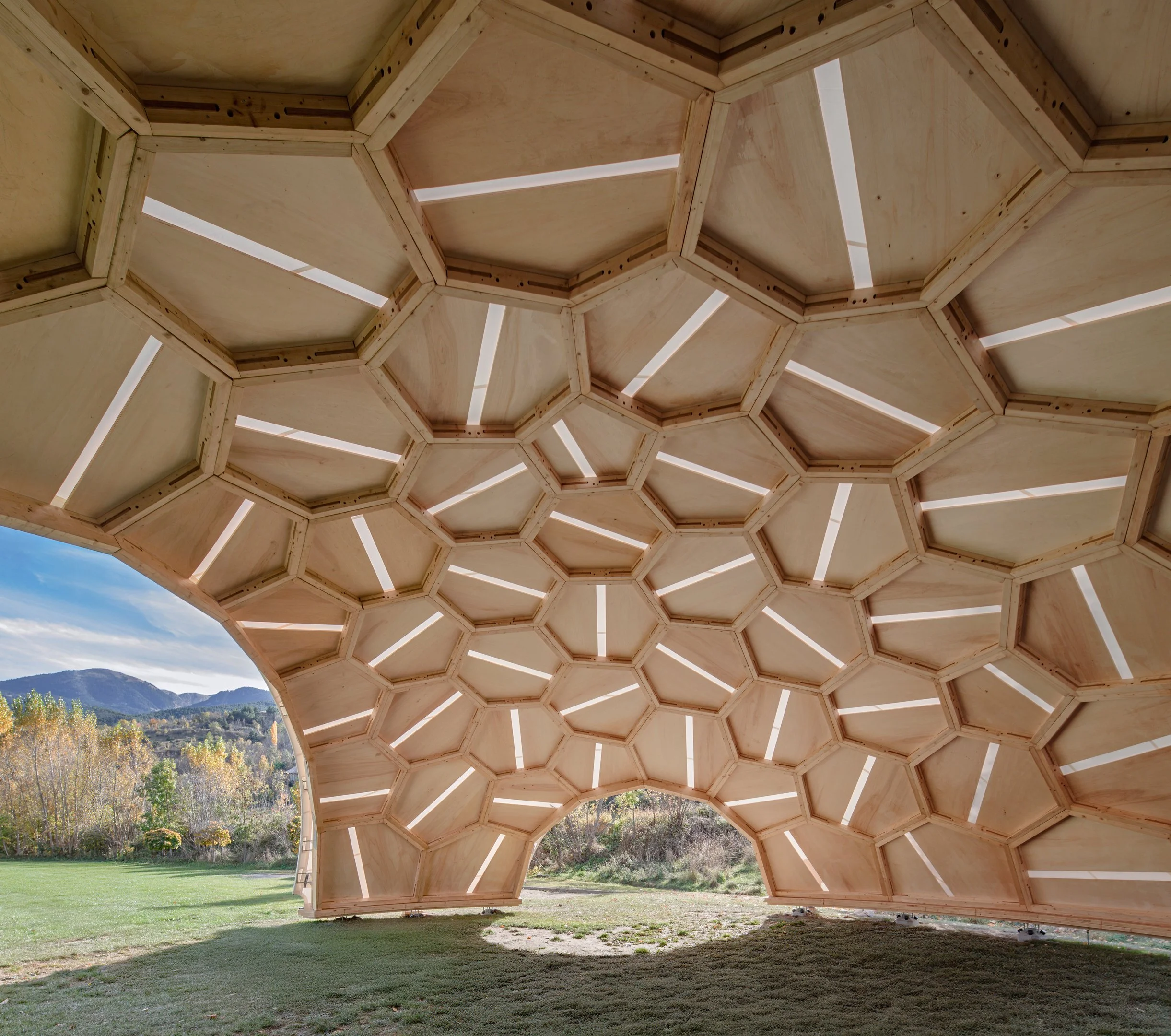
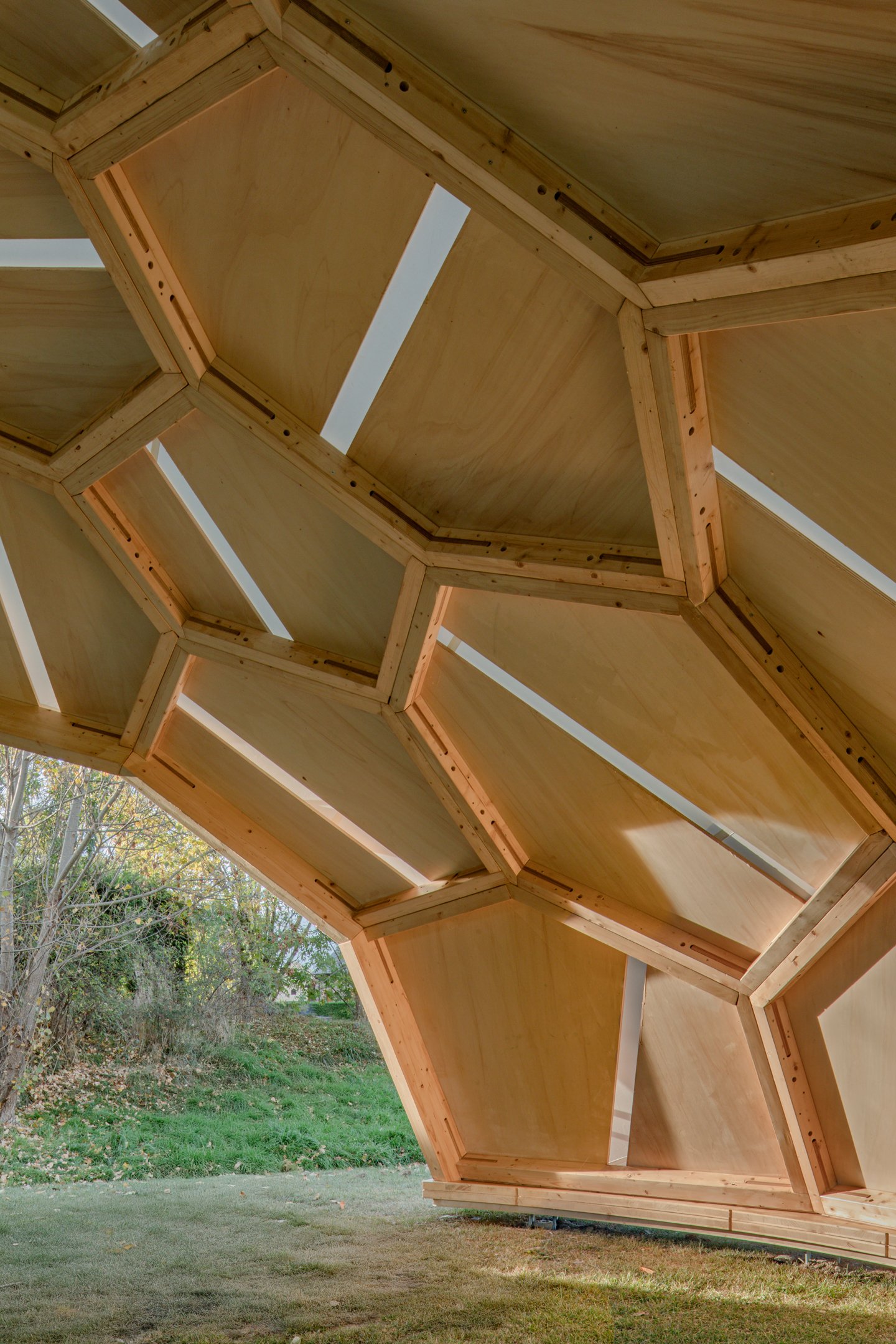
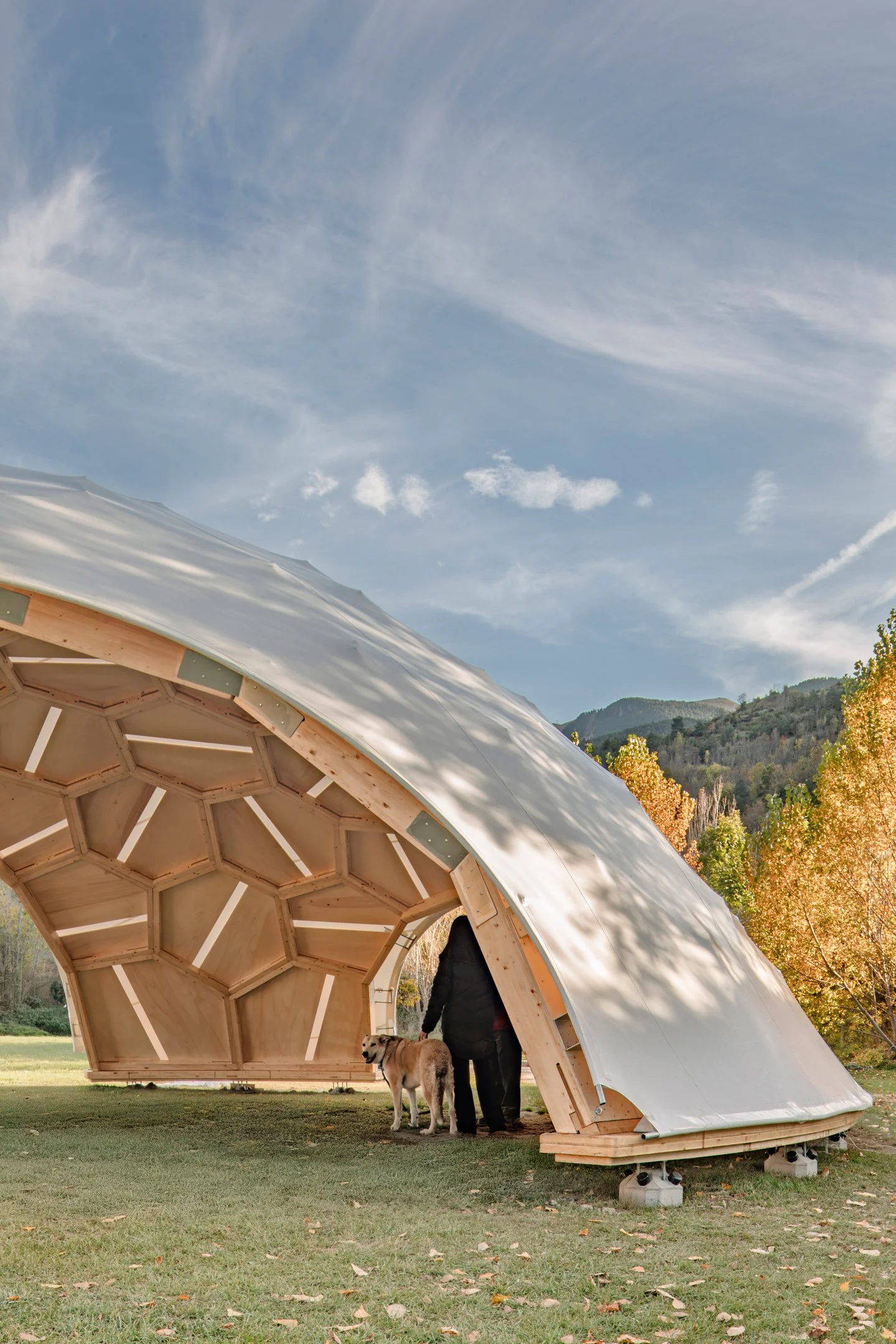
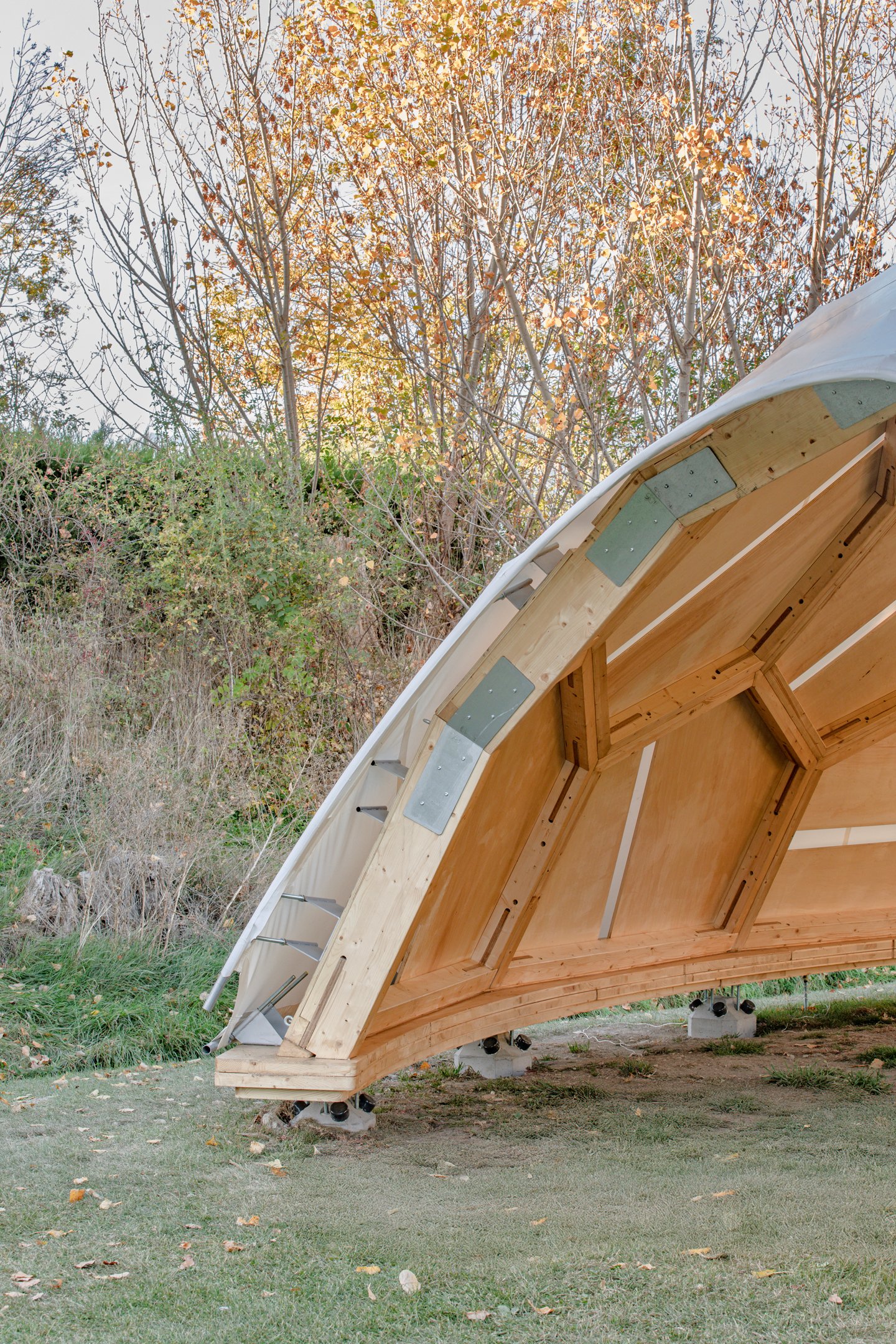
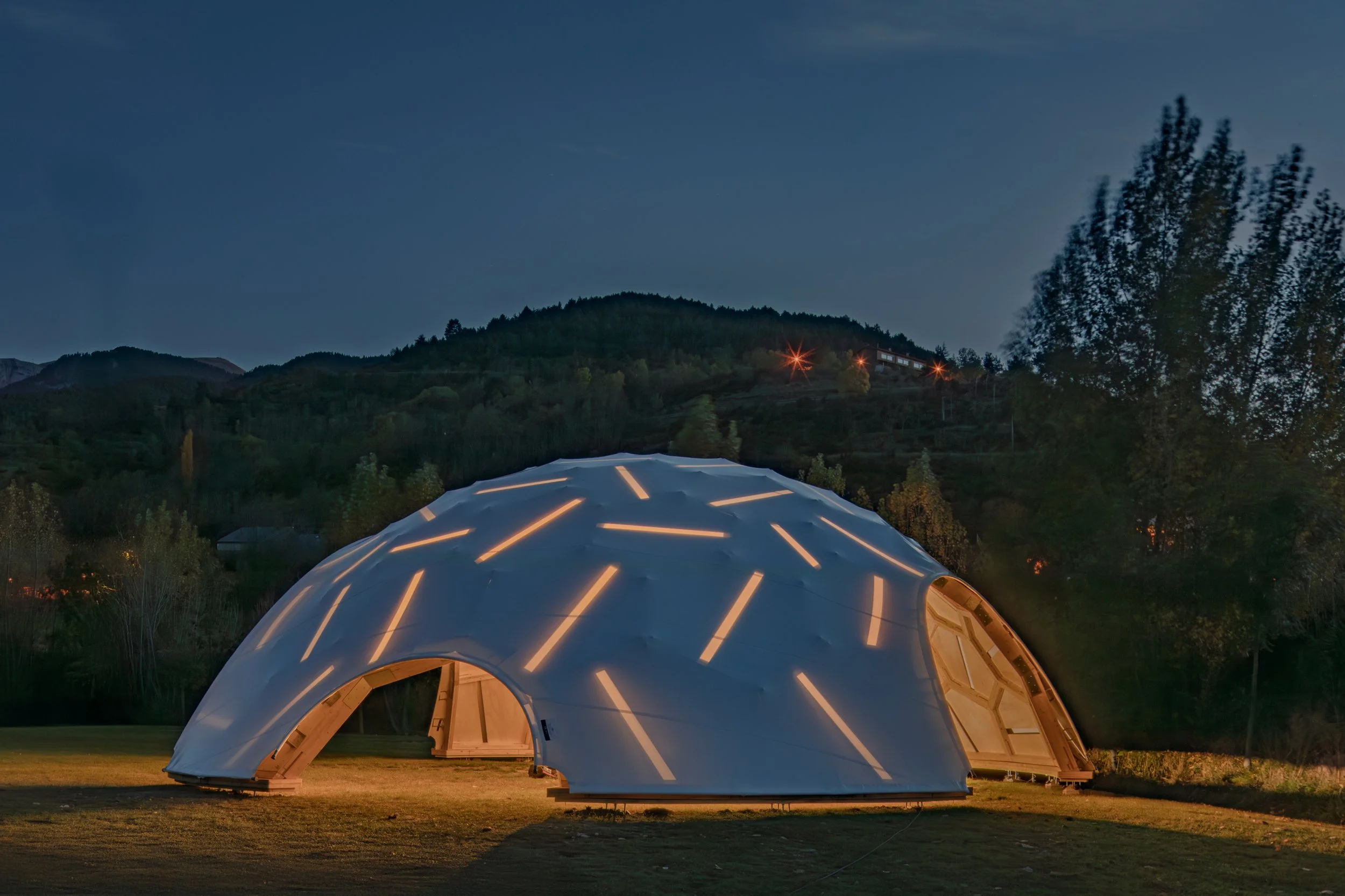
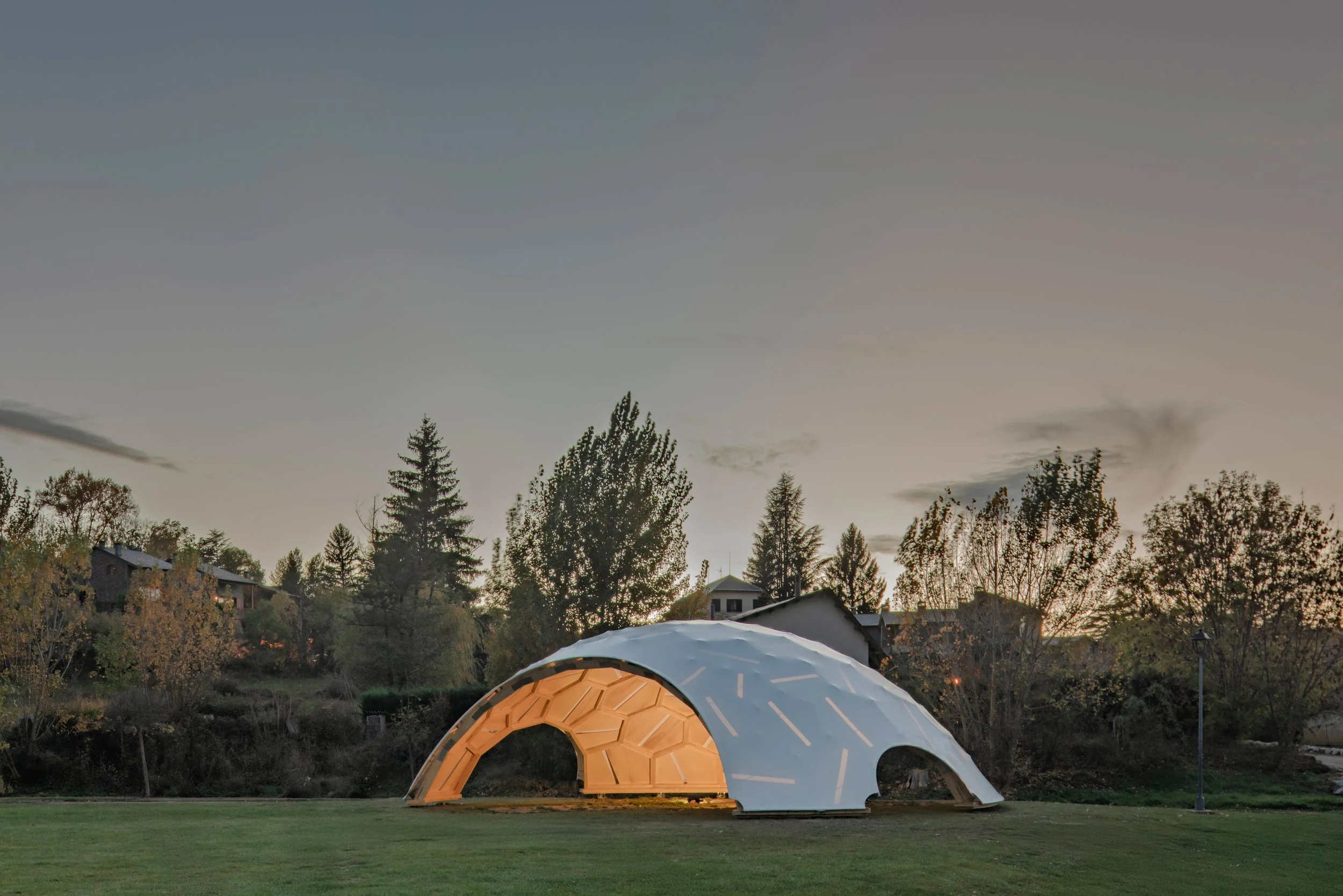
The pavilion is a segmented wooden shell composed of planar hexagonal modules, designed as an antifunicular ribbed structure with multiple entrances that open it to its surroundings
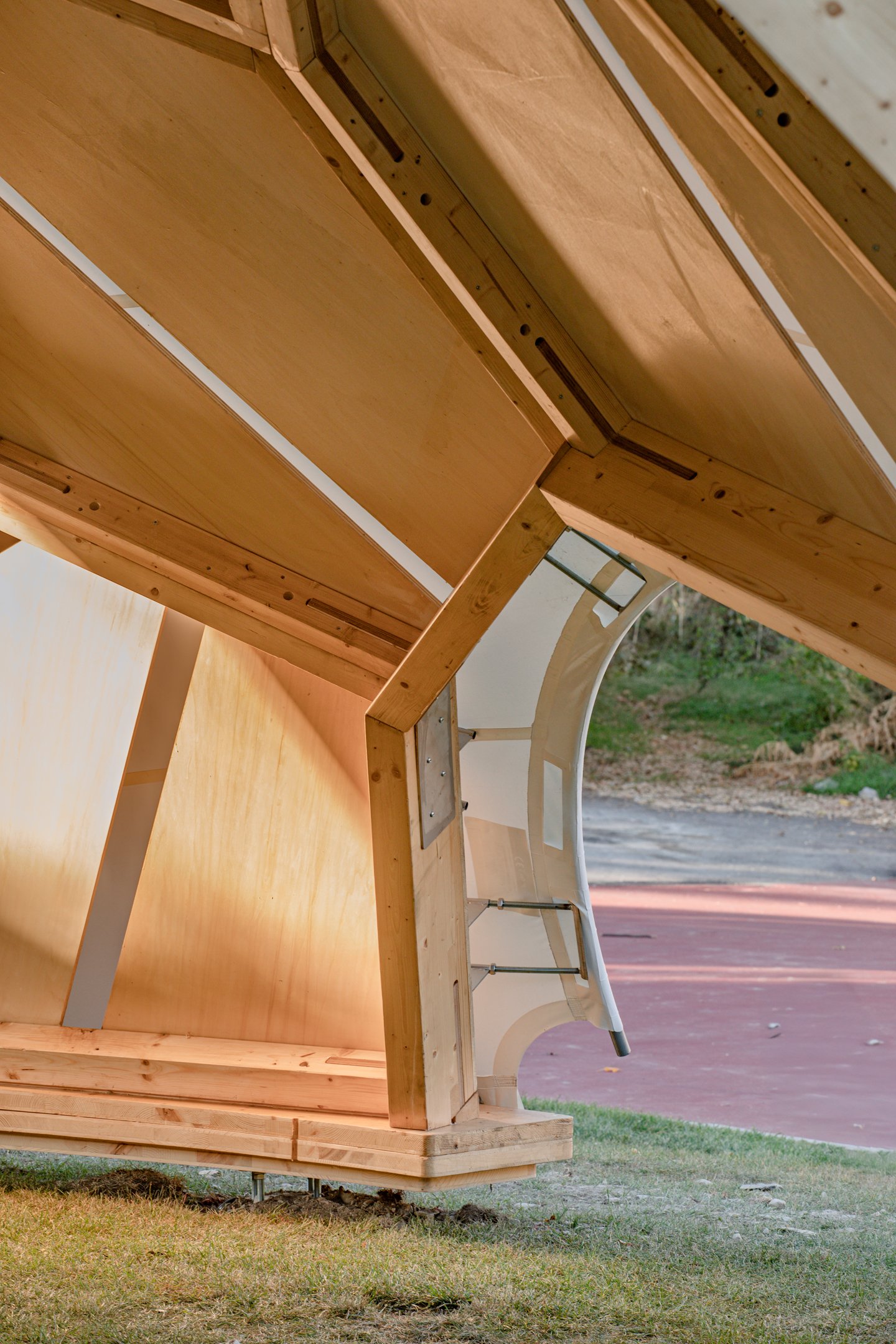
Perimeter beams carry the main loads, while poplar plywood provides in-plane stiffness. A key innovation was the rationalization of the joints, balancing structural performance with sustainability and simplified manufacturing.
The construction phase became an intense collective effort. Over the course of a single week, students and faculty installed the foundation, assembled the prefabricated structure, and positioned the final membrane. Beyond its architectural value, the project served as a rare full-scale learning experience, revealing the entire process from parametric modeling to on-site assembly, and leaving Alp with a lightweight, sustainable pavilion that will serve the community for years to come.
Múrgula
Faculty Gerard Bertomeu, Quim Escoda, Enrique Soriano, Pep Tornabell, Rafael Hellín, Bruno García.
Guest Professors Almudena Majano, Antonio Lara, Matthew Tam, Simon Vorhammer
Collaborator Institution Alp Municipality
Student Team Khalid Abbood, Bilgenur Balkiz, Mihir Bhamare, Agustina Couzier, Arvind Das, Rahel Degu, Helly Desai, Youssef Essam, Davis Gan, Sara Guessous, Pravin Kandasamy, Maciej Król, Dana Mneimneh, Jaume Monclús, Nathaly Osorio, Tomás Pérez, Sayed Sanobar, Sena Sezer, Damla Şişman, Anna Solà, Maria Tzavida, Martin Uquillas, Mehad Yasser.
Sponsors Rothoblaas, Festool
Fabrication Partners Tallfusta (timber beams machining), Sumeplast (plywood machining), Garnica (poplar plywood), Laserpenta (laser cutting and folding), Piloedre (dry-foundation system), Tecnodimension (membrane manufacturing)
Acknowledgments Maria Tiana, Topografía Cerdanya, the Karamba3D Team, Daniel Piker.
PhotoCredit Andrés Flajszer, Arvind Das (drone)
Date 21/10/2025